Gray Shares Passion for Bringing JROTC to Scott County Schools
PROTECTED CONTENT
If you’re a current subscriber, log in below. If you would like to subscribe, please click the subscribe tab above.
Username and Password Help
Please enter your email and we will send you a password reset link.
By Cheryl Owens
Mississippi Spirit
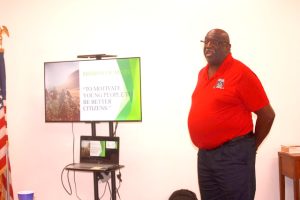 Despite a rainy Tuesday afternoon, members of the Morton Lions Club gathered June 23 to hear a presentation from Lt. Col. (Ret.) Albert Gray, who spoke about a subject that has become one of his greatest passions — bringing a Junior Reserve Officers’ Training Corps (JROTC) program to the Scott County School District.
Gray, who serves as the Senior Army Instructor for the Richland High School JROTC program, told club members that while many people mistakenly believe JROTC is designed primarily for military recruitment or student discipline, its true purpose is much broader.
“JROTC is to motivate kids to become better citizens,” Gray said.
A 1981 graduate of Forest High School, Gray retired from the Mississippi Army National Guard after 32 years of military service. He has spent the past 16 years teaching JROTC, including the last four years at Richland High School.
Throughout his presentation, Gray described JROTC as a leadership development program that teaches responsibility, respect, citizenship and confidence while giving students practical skills they can use throughout their lives.
“It isn’t about making every student join the military,” he explained. “It’s about giving them opportunities to grow into leaders.”
Gray said students enrolled in JROTC learn much more than military customs. The curriculum includes leadership, public speaking, financial literacy, first aid and teamwork. Students also participate in physical training, although he emphasized the activities are designed to be enjoyable rather than overly demanding.
“Monday and Tuesday we have classroom instruction,” Gray said. “Wednesday is uniform inspection, and Thursday and Friday we do physical training. We try to give them something different, and that’s one reason so many kids enjoy JROTC.”
Leadership is placed squarely in the hands of the students themselves.
Gray explained that his junior and senior cadets conduct staff meetings and organize many of the program’s activities, including the annual military ball.
“I give them guidance,” he said. “If they plan it and it doesn’t go well, then they learn from it. That’s how leadership develops.”
The cadets also stay active outside the classroom.
Students serve on color guards at athletic events, participate in drill competitions, rifle and drone teams, cannon crews and saber guard ceremonies. Community service is another important part of the program, with cadets volunteering through organizations such as Toys for Tots and assisting local charities whenever needed.
Summer activities include leadership camps where students learn outdoor skills, including canoeing and water safety.
Gray said one aspect of JROTC that often surprises people is its commitment to inclusion.
He shared stories of students with special needs who have thrived in the program, including one young man who proudly raised the American flag one morning.
“We don’t discriminate,” Gray said. “They wear the uniform. They participate. We don’t treat them any differently.”
Gray said those students often become some of the program’s strongest supporters because they are given the same opportunities and responsibilities as everyone else.
According to Gray, JROTC programs also tend to produce positive results in the classroom. Nationally, students enrolled in JROTC often demonstrate improved attendance, higher graduation rates and stronger academic performance while developing self-discipline and accountability.
Mississippi currently has 82 JROTC programs representing the Army, Air Force, Navy, Marine Corps and Coast Guard.
Gray hopes one day Scott County will be added to the growing list of Mississippi school districts offering JROTC, providing local students with another opportunity to develop leadership skills, serve their community and prepare for future success.
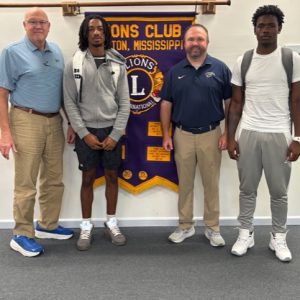
Also attending the luncheon were newly appointed Scott County School District Superintendent Chad Harrison, who officially assumes his new role July 1, retired Superintendent Alan Lumpkin and Pastor Charles Hughes. Their attendance underscored the community’s continued interest in educational opportunities that prepare students both inside and outside the classroom.